
 By
By 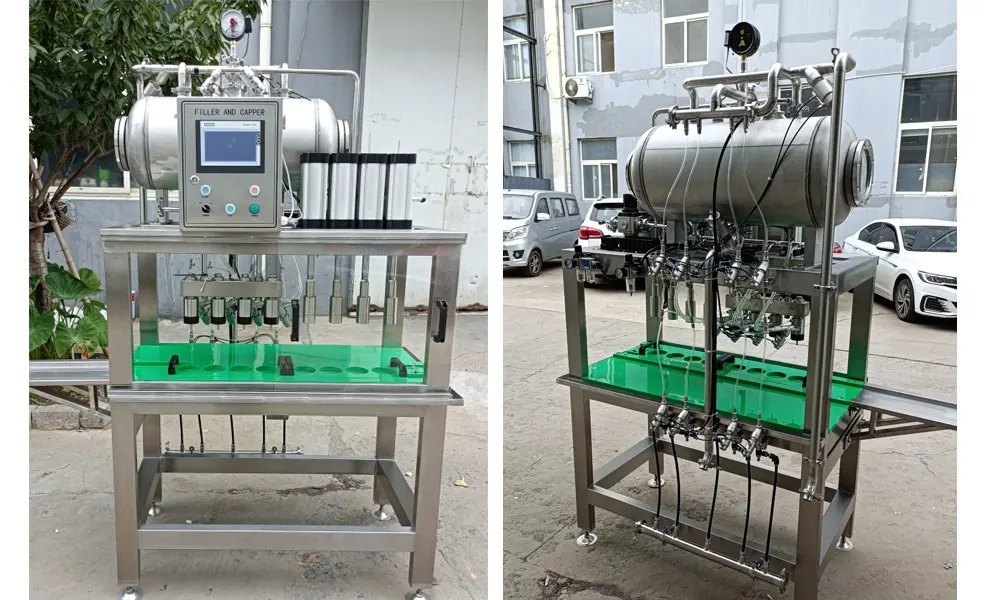
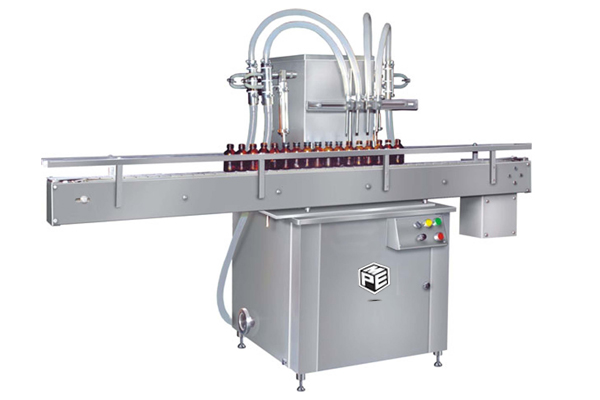
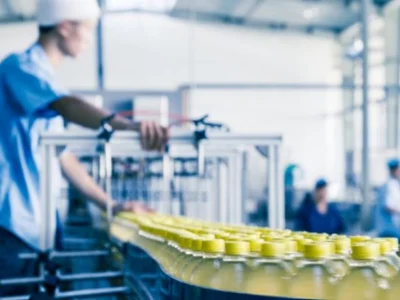
In today’s ruthlessly competitive global marketplace, liquid filling machines stand as the unsung heroes of Singapore’s manufacturing sector, working tirelessly behind the scenes to ensure products reach consumers with precision that would have seemed impossible just decades ago. These mechanical marvels operate in climate-controlled rooms across the island nation, filling everything from pharmaceutical vials to food containers with metronomic consistency.
The Cold War of Manufacturing Efficiency
The liquid filling machine represents a technological breakthrough born from necessity. Like the space race of the mid-20th century, the drive for manufacturing supremacy has pushed engineers to develop increasingly sophisticated solutions to seemingly mundane problems.
Consider what these systems accomplish:
- Microsecond-precise flow control mechanisms that can handle products from water to molasses
- Adaptive programming that self-adjusts to maintain accuracy despite environmental variations
- Cross-contamination prevention protocols that would satisfy the most demanding clean room standards
- Production speeds that can fill thousands of units per hour without sacrificing quality
The Hidden Economics of Precision
Behind the stainless steel exteriors of these machines lies a brutal economic reality. Every drop matters. Every milliliter has a cost.
“When analyzing the ROI of Singapore liquid filling machine installations, we consistently find waste reduction between 8-12% compared to older systems, translating to approximately S$175,000 in annual savings for mid-sized operations,” reports a Singapore manufacturing efficiency consultant.
This relentless mathematics drives adoption. In manufacturing, margins often determine survival, and the precision of modern filling systems directly impacts the bottom line.
The Technological Spectrum: From Basic to Revolutionary
Gravity-Fed Systems
The simplest approach relies on the constant force of gravity – predictable, reliable, and sufficient for many applications where absolute precision isn’t critical.
Pressure-Time Filling
More sophisticated systems carefully control both pressure and duration to achieve consistent fills even when product viscosity might fluctuate slightly.
Mass Flow Technology
The most advanced systems employ Coriolis principles to measure actual mass rather than volume, eliminating variables like temperature and density from the equation entirely.
AI-Enhanced Adaptive Systems
At the cutting edge, we now see systems that learn from their own performance, continuously refining their parameters to achieve previously impossible consistency.
The Battlefield of Global Competition
Singapore’s position as a manufacturing hub depends critically on efficiency and precision. The nation’s industries face existential pressure from neighboring countries with lower labor costs.
Pharmaceutical Manufacturing
In cleanrooms throughout Singapore, filling machines operate under the strictest validation protocols:
- Serialization systems tracking every vial
- Automated rejection mechanisms for any deviation from specifications
- 100% weight verification ensuring dosage accuracy for critical medications
- Electronic batch recording systems documenting every parameter
The Food Security Equation
Singapore imports over 90% of its food. Local production relies heavily on maximizing efficiency through technology.
“The implementation of next-generation liquid filling technology within Singapore’s food manufacturing sector has increased production capacity by 43% on average while reducing labor requirements by 26%,” notes a Singapore liquid filling machine industry report.
Chemical Sector Imperatives
For hazardous materials, precision becomes a safety mandate, not merely an economic consideration. Modern systems minimize human exposure while maintaining exacting standards.
The Human Factor in an Automated World
Despite the march toward automation, skilled technicians remain essential. They monitor, maintain, and optimize these sophisticated systems, their expertise often developed through decades of hands-on experience.
The relationship between operator and machine resembles that of pilot and aircraft – a partnership where human judgment complements mechanical precision.
Environmental Calculus
Modern liquid filling systems are increasingly designed with sustainability metrics in mind:
- Resource-efficient cleaning systems that minimize water usage
- Product recovery mechanisms that capture and recycle excess material
- Energy management systems that optimize power consumption
- Waste reduction protocols that minimize environmental impact
The sustainability benefits offer powerful secondary advantages beyond the direct operational improvements.
The Geopolitical Dimensions
As supply chains become increasingly contested territory in global power struggles, manufacturing self-sufficiency takes on national security dimensions. Singapore’s investment in advanced manufacturing technology represents not just economic pragmatism but strategic necessity.
The island nation’s limited resources and dependent position make technological leadership non-negotiable. Advanced manufacturing capabilities, including state-of-the-art filling systems, provide essential leverage in a world of unpredictable alliances and fragile supply networks.
The Silicon Integration Frontier
The convergence of industrial equipment with advanced silicon has revolutionized what was once purely mechanical engineering. Modern liquid filling systems increasingly feature machine learning algorithms that optimize performance across changing conditions – detecting microscopic variations in viscosity, temperature, and flow characteristics invisible to human operators.
This intelligence layer transforms these machines from mere tools into manufacturing partners that continuously learn and adapt to their environments, extending their operational lifespan while improving performance metrics year over year.
The Future Calculus
Tomorrow’s systems will likely incorporate quantum sensors, advanced materials science, and artificial intelligence far beyond current capabilities. The race continues without pause, driven by the merciless mathematics of efficiency.
For Singapore businesses navigating increasingly treacherous global markets, the decision to invest in advanced manufacturing technology is not merely operational but existential. Few components of the production process deliver more immediate and measurable returns than implementing the right liquid filling machine in Singapore.







Comments